


Blog


Cigbuyer Disposable Vapes Market Trends: What B2B Buyers Need to Know in 2026
Written by EC-TIMES OEM Strategy Team
Between February 2020 and September 2025, disposable devices went from 26.0% to 56.5% of U.S. e-cigarette unit share, based on Monitoring E-Cigarette Sales data. For buyers evaluating cigbuyer disposable vapes, the demand question is settled. The 2026 question is sharper: will your factory, compliance file, SKU strategy, and brand position survive the next round of price pressure?
2026 Market Overview

The disposable vape market is still active, but 2026 is not a simple volume story. Grand View Research estimates the global disposable e-cigarettes market at USD 5.7 billion in 2021 and projects it to reach USD 14.8 billion by 2030, at an 11.2% CAGR from 2022 to 2030. This article uses that disposable-specific data point instead of broader e-cigarette and vape market forecasts, because total-category projections can overstate what a B2B buyer should expect from a single disposable program.
For buyers scanning cigbuyer disposable vapes in 2026, the important shift is not only demand growth. It is how demand is being captured. The easy spread between factory cost and wholesale resale is narrowing. Retailers are comparing more offers, distributors are carrying more inventory risk, and end consumers can switch from one device to another with almost no friction. In that environment, the buyer who only imports a hot-selling third-party brand usually ends up fighting on price.
North America remains the most competitive channel because velocity is high and regulatory pressure is visible. FDA import review can include market authorization, labeling, and other requirements. That means a disposable vape supplier must be able to support paperwork, batch traceability, warning layout control, and product consistency. A lower FOB quote is not a win if the shipment creates customs questions, retailer pushback, or inconsistent sell-through.
The bigger commercial question is brand ownership. Selling someone else’s brand means your team does the local work - retailer education, credit terms, shelf negotiation, after-sales handling, and reorder forecasting - while consumer recognition belongs to another company. When competition heats up, that brand owner can change pricing, open another distributor, or let your local rivals sell the same device. Building your own private label vape line is the most direct way to turn channel effort into brand equity.
What Makes a Cigbuyer-Grade Disposable Vape
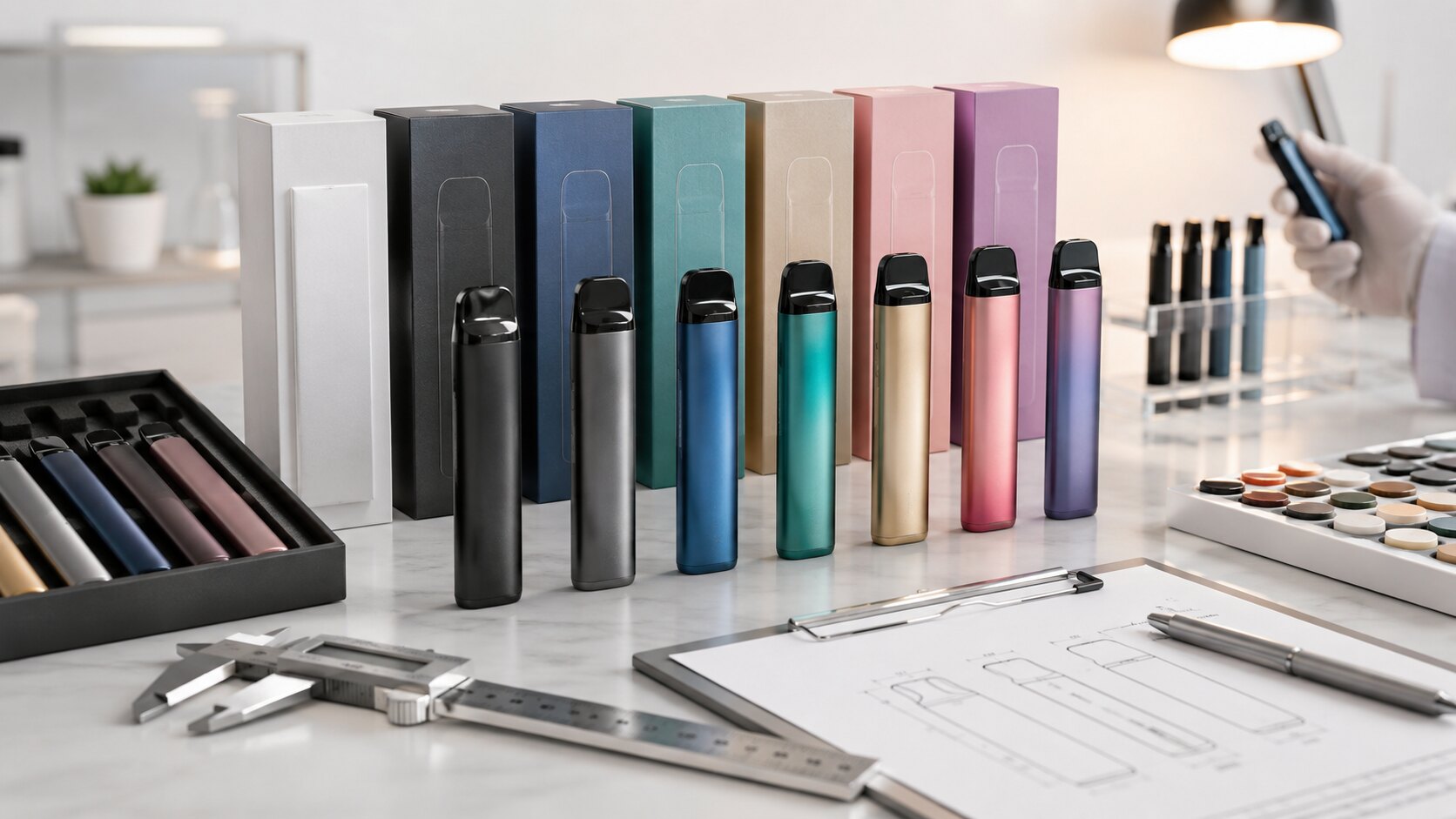
A cigbuyer disposable vapes program should start with a buyer-grade specification, not a catalog photo. Buyer-grade means the device can be manufactured consistently, shipped legally, stored safely, and reordered without surprise quality drift. The visible shell matters, but the real value sits inside the bill of materials: battery cell, chipset, coil, cotton or ceramic structure, tank sealing, e-liquid formulation, airflow path, and assembly tolerance.
The puff count should be treated as a commercial promise, not a decorative number. Actual performance depends on liquid volume, coil resistance, output power, airflow design, user puff behavior, and whether flavor remains stable through the final third of the tank. A high-count SKU with an undersized battery creates dead-battery returns. A device with weak wicking creates burnt taste complaints. Both problems cost more than the savings from a cheaper component.
Flavor planning is another part of buyer-grade thinking. A serious wholesale disposable vapes program should not launch with every flavor the factory can name. A stronger matrix normally includes a few proven anchors, several regional winners, and a small number of controlled test flavors. Fruit-ice, menthol, tobacco, beverage, dessert, and sour profiles can all play a role, but the mix should be tied to channel data and reorder discipline.
Hardware feel still drives repeat purchase. Draw-activated firing should be responsive without being too sensitive during transport. Airflow should feel smooth, not hollow. The mouthpiece should feel clean, secure, and comfortable. The tank system should resist leakage after vibration, pressure changes, and warm storage. These details become visible when a distributor receives stained trays, condensation under caps, or inconsistent draw resistance across master cartons.
Packaging is also part of product quality. A buyer-grade disposable should have batch codes, carton labels that match shipping documents, scannable barcodes, destination-market warning layouts, and packaging materials that survive long-haul logistics. For a private label vape project, packaging is where brand credibility starts. If the box looks generic, confusing, or careless, the consumer will treat the device like a commodity.
At EC-TIMES, specification reviews happen before sampling begins - not after the first shipment reveals a mismatch. That early review is how a buyer’s commercial idea becomes a producible, reorderable, market-specific private label vape program.
Sourcing Challenges B2B Buyers Face in 2026

MOQ pressure is the first trap. Some factories quote attractive low MOQs to win the buyer, but very small runs often mean shared components, limited customization, weaker line priority, and poor price stability. On the other side, oversized MOQs force buyers to carry inventory before sell-through is proven. The better path is a staged purchase plan: pilot run, limited regional launch, reorder review, then controlled scale-up.
Lead time is the second pain point. Buyers often calculate only assembly time, while the real schedule includes flavor confirmation, packaging design, compliance review, raw material purchasing, pilot testing, mass production, aging, final QC, export booking, and customs clearance. Shenzhen and Dongguan factories can move quickly, but speed without discipline is dangerous. Skipping aging tests or incoming material checks may only save a few days, while creating months of return claims.
The compliance picture gets more complex when selling across borders. U.S., Canadian, U.K., EU-style, and Southeast Asian programs can require different nicotine strengths, warning formats, packaging rules, tax or stamp workflows, language versions, and product structures. A bulk vape order that looks efficient on one purchase order can become messy if the factory cannot separate SKUs by market and keep the documents aligned with the cartons.
Quality consistency is the challenge buyers usually feel after the second reorder. Batch one may receive special attention because the factory wants to win the account. Batch two reveals the real system. Watch for silent changes in coil supplier, cotton density, flavor concentrate, battery cell, charging port tolerance, or gasket material. An OEM vape manufacturer should notify the buyer before changing an approved component, not after the shipment has already landed.
The hardest part is that all of these problems hit margin at the same time. Price competition lowers resale profit. Quality claims reduce cash flow. Compliance delays freeze inventory. Generic branding weakens repeat purchase. That is why the 2026 sourcing discussion cannot stop at “what is your best price?” It needs to ask whether the supplier can help the buyer build a defensible product and a defensible brand. That is where OEM/ODM changes the math.
Why OEM/ODM Is the Smarter Play for Scaling Buyers

For buyers building a cigbuyer disposable vapes private label program, OEM/ODM is not only about printing a logo on the box. It is a way to control the product architecture, SKU logic, packaging story, documentation package, and reorder roadmap. A pure resale model leaves the buyer exposed to copycat listings and price undercutting. A branded OEM/ODM model gives the buyer a clearer reason to exist in the channel.
This matters because selling other people’s brands can turn a strong distributor into a low-margin service provider. Your team finds retailers, handles local promotion, manages credit risk, absorbs complaints, and explains product differences at the counter. But when the consumer comes back, they ask for the brand on the device, not the importer who built the route to market. Owning the brand changes that equation. It gives the buyer a chance to build recognition, retailer loyalty, and a product story that competitors cannot copy overnight.
EC-TIMES was established in 2014 and has spent more than a decade in vape supply and manufacturing. As an experienced vape supplier, EC-TIMES has supported OEM/ODM production for established vape brands and understands what B2B buyers need before a private label product can scale: a realistic specification, a controlled flavor map, packaging that fits the target market, a locked BOM, pilot-run testing, and batch-level QC records. The EC-TIMES OEM/ODM disposable vape manufacturing program is built around that sequence, not a one-size-fits-all catalog. That is different from a factory that treats every buyer question as a pre-sale formality.
ODM is usually the faster route when the buyer needs a proven platform. Existing molds, airflow structures, chipset options, and battery configurations can shorten development time while still allowing customization of finish, mouthpiece feel, flavor range, nicotine strength by market, and packaging. OEM makes more sense when the buyer wants deeper differentiation, such as a unique industrial design, dedicated flavor portfolio, custom display, special airflow profile, or proprietary mouthpiece structure.
The value is not only technical. A strong OEM/ODM partner helps the buyer make better commercial choices before money is tied up in inventory. EC-TIMES can help translate a target retail price, channel margin, flavor direction, and market destination into a sample plan and production path. That process protects the buyer from launching too many SKUs, using the wrong battery-liquid pairing, or approving packaging that later needs to be redesigned.
How to Evaluate a Disposable Vape Manufacturer
When evaluating cigbuyer disposable vapes at scale, do not start with the catalog. Start with questions that reveal operating discipline. Ask how the factory controls incoming batteries, how it tests nicotine concentration, how it handles leakage risk, how it quarantines failed batches, and how it prevents component substitutions after sample approval. A serious manufacturer can explain the process without hiding behind vague claims.
A useful checklist should separate critical items from standard checks. The goal is not to find the cheapest disposable vape supplier. The goal is to find the supplier that can deliver the same product repeatedly, with the right documents, at the right landed cost, while helping the buyer build brand equity instead of only moving anonymous inventory.
⚡ Critical checks:
Market separation: Can the factory build different versions for the U.S., Canada, the U.K., EU-style markets, and Southeast Asia without mixing specifications, packaging, or carton labels?
BOM control: Does it lock the approved battery cell, chipset, coil, tank material, gasket, charging port, and e-liquid formula before mass production?
Compliance documentation: Can it support ingredient information, nicotine test data, warning layout control, batch records, and destination-market artwork review?
Standard checks:
Testing process: Does it run draw tests, charging tests, leakage tests, aging tests, drop checks, carton vibration checks, and retained-sample comparison?
Traceability: Can each retail unit, inner box, master carton, and batch be traced back to production date, production line, operator group, and material lot?
Flavor capability: Does the factory manage sensory review, nicotine assay control, flavor stability, and controlled substitutions?
MOQ logic: Are MOQs tied to real material, packaging, and line-change economics, or are they used only as a sales tactic?
Production visibility: Can the buyer receive pre-production samples, golden samples, pilot-run data, in-line QC reports, and final inspection records?
After-sales handling: Is there a written defect-claim process with thresholds, evidence requirements, replacement terms, and corrective-action reporting?
Commercial hygiene: Are payment terms, Incoterms, carton dimensions, lead times, artwork ownership, and confidentiality terms written clearly before deposit?
Red flags are usually visible early. Be careful with suppliers that promise every certificate without explaining scope, quote huge puff counts without engineering details, change prices after deposit, refuse third-party inspection, or push buyer-branded packaging before confirming destination-market requirements. Also avoid suppliers that treat compliance as the importer’s problem. The importer may carry market exposure, but the manufacturer controls much of the technical evidence.
A good manufacturer will also push back when pushback protects the buyer. If a requested puff count does not match the battery, if the flavor list is too wide for a pilot run, if the packaging direction creates compliance risk, or if the MOQ is too high for the first launch, the factory should say so. That kind of discipline is one reason scaling buyers work with EC-TIMES instead of shopping only for the lowest spreadsheet price.
If your 2026 plan is to stop competing only on price and start building a vape brand that retailers and consumers can recognize, send EC-TIMES your SKU brief, target market, flavor direction, expected order volume, and packaging concept. Our OEM/ODM team will come back with a practical sample plan, MOQ logic, timeline, compliance document list, and the production risks to solve before your inventory is already on the water.